WEBSITE DESIGN
Custom Website Design vs. Templates: Which Is Better for Your Business?
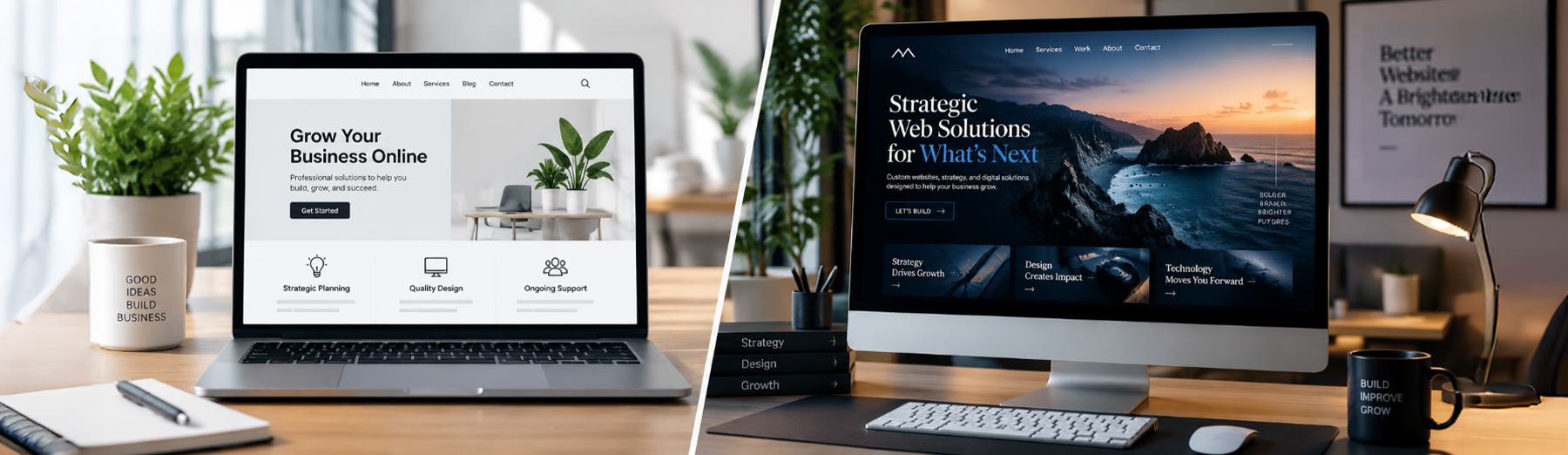
Choosing between a custom website design and a prebuilt template can affect how your website looks, performs, scales, and supports long-term business goals. Templates can be faster and more affordable to launch, while custom design offers greater flexibility, brand control, and room for tailored functionality.

Custom Website Design vs. Templates: What’s the Difference?
The main difference is how much of the website is created specifically for the business versus how much is based on a prebuilt design framework.
A custom website design is developed around the company’s brand, goals, content, functionality, and user experience. The layout, visual system, and site structure can be tailored to fit specific requirements.
A website template uses a predesigned structure that is customized with the company’s branding, content, images, and settings. Templates can still produce professional websites, but they usually come with more predefined limitations.
Key differences include:
- Level of design flexibility
- Branding control
- Development time
- Upfront cost
- Custom functionality
- Performance optimization
- Ease of future changes
- Long-term scalability
- Dependence on theme or template limitations
- Ongoing maintenance requirements
Neither approach is automatically better in every situation. The right choice depends on what the business needs from the website now and how much flexibility it may require in the future.
Website Design Tip: Choose the approach that supports the business goals and user experience first—not simply the option with the lowest upfront cost.
When a Custom Website Design Is the Better Choice
A custom website design is usually the stronger option when a business needs a website that reflects its brand closely, supports specific functionality, or must scale beyond the limitations of a prebuilt template.
Custom design may be the better choice when:
- The business has a distinct brand identity
- The website requires unique page layouts
- User experience needs to be tailored to a specific audience
- Custom functionality or integrations are required
- The site needs to support complex services, products, or workflows
- Performance optimization is a high priority
- The business expects the website to grow significantly
- Template limitations would restrict future changes
- Conversion paths need to be designed around specific business goals
- The company wants greater control over the overall design system
A custom website typically requires more planning, design, and development, but it can provide a stronger long-term foundation when the business has specific requirements.
Custom Design Tip: Custom design is most valuable when flexibility, brand control, functionality, and long-term scalability matter more than launching as quickly or cheaply as possible.
When a Website Template Is the Better Choice
A website template can be a practical option when the business needs a professional website quickly and does not require highly customized layouts, functionality, or integrations.
A template may be the better choice when:
- The budget is limited
- The website needs to launch quickly
- The site structure is relatively simple
- Standard page layouts meet the business needs
- Branding requirements are straightforward
- Custom functionality is minimal
- The business is testing a new idea or service
- The website is unlikely to require major expansion
- Ongoing maintenance needs to stay simple
- A proven theme or template already matches the desired style
A well-chosen template can still provide a polished, effective website when it is customized carefully and supported by strong content, branding, usability, and performance optimization.
Template Tip: Templates work best when the business needs speed and simplicity and does not require extensive customization or unique functionality.
Custom Website Design vs. Templates: Key Differences
Both approaches can produce a professional business website, but they differ in flexibility, cost, development time, scalability, and long-term control.
| Factor | Custom Website Design | Website Template |
|---|---|---|
| Design Flexibility | High — layouts and components can be tailored to the business | More limited by the predefined template structure |
| Brand Control | Greater control over visual identity and presentation | Branding is adapted within an existing design framework |
| Development Time | Usually longer because more planning and customization are involved | Usually faster because the core design is already built |
| Upfront Cost | Typically higher | Typically lower |
| Custom Functionality | Easier to build around specific business requirements | May depend on plugins, add-ons, or workarounds |
| Performance Optimization | Can be planned and optimized around the site’s specific needs | Depends heavily on the quality and complexity of the template |
| Scalability | Stronger for businesses expecting complex future growth | Can become restrictive as requirements expand |
| Maintenance | Depends on the development approach and level of customization | Often simpler initially when using a well-supported template |
| Uniqueness | Designed specifically for the business | May resemble other websites using the same template |
| Long-Term Flexibility | Greater control over future changes and development | More dependent on theme or template limitations |
A template can be efficient for simpler needs, while custom design provides more control when branding, functionality, performance, and future growth are important.
Decision Tip: Compare the long-term flexibility and business value of each approach—not just the initial design cost.
How Cost Should Influence the Decision
Cost is an important factor when choosing between custom website design and a template, but the lowest upfront price is not always the best long-term value.
A template is usually less expensive because much of the design and structure already exists. Custom website design typically requires more planning, design, development, testing, and refinement.
Factors that can affect cost include:
- Number of pages
- Level of design customization
- Custom functionality
- Ecommerce requirements
- Third-party integrations
- Content creation or migration
- SEO requirements
- Performance optimization
- Accessibility needs
- Ongoing maintenance and support
A template can be cost-effective for a simpler website, while custom design may provide better value when the business needs more flexibility, stronger branding, or room to grow.
Budget Tip: Compare the total long-term value of each option, including flexibility, maintenance, performance, and future development needs.
How SEO and Performance Differ Between Custom Websites and Templates
SEO and performance can be strong with either approach, but the level of control is often different.
A custom website can be planned around technical SEO, page speed, code efficiency, structured data, and content architecture from the beginning. A template can also perform well, but results depend heavily on how the theme is built and how much unnecessary functionality is included.
Key considerations include:
- Code quality and theme complexity
- Page speed and Core Web Vitals
- Mobile responsiveness
- Heading and content structure
- Internal linking flexibility
- Structured data implementation
- Image and script optimization
- Plugin or add-on dependency
- URL and site architecture control
- Ease of future technical SEO improvements
A lightweight, well-built template can outperform a poorly developed custom site, while a carefully planned custom build can offer greater control over performance and search optimization.
SEO & Performance Tip: The quality of the implementation matters more than whether the site is custom or template-based. Choose the approach that allows clean code, strong performance, and flexible SEO improvements.
How Branding and User Experience Differ
Branding and user experience are often where the differences between a custom website and a template become most noticeable.
A custom website can be designed around the company’s visual identity, audience, messaging, and conversion goals. Templates usually provide a predefined layout and design system that can be customized, but they may offer less control over how every part of the experience is structured.
Key considerations include:
- Brand colors and typography
- Custom page layouts
- Visual hierarchy
- Navigation patterns
- Calls to action
- User journeys
- Content presentation
- Mobile experience
- Accessibility
- Consistency across pages
A template can still support strong branding when it is carefully customized, but custom design provides more freedom when the website needs a distinctive identity or highly tailored user experience.
UX Tip: Choose the approach that gives users the clearest path through the site while supporting a consistent and recognizable brand experience.
How Scalability and Future Growth Compare
A website should support the business not only at launch, but also as services, content, integrations, and customer needs expand over time.
Custom website design usually provides more flexibility for future growth because the structure and functionality can be planned around specific business goals. Templates can also scale, but growth may eventually be limited by the theme’s architecture, built-in options, or dependency on plugins and add-ons.
Scalability considerations include:
- Adding new services or product lines
- Expanding ecommerce functionality
- Supporting additional locations or audiences
- Adding integrations and automation
- Creating new content types or templates
- Improving conversion paths
- Supporting multilingual content
- Expanding SEO and content strategy
- Adding custom features
- Maintaining performance as the site grows
A template may be enough for a smaller or simpler site, while custom design can provide more room for businesses with complex or evolving requirements.
Scalability Tip: Choose an approach that can support where the business is going, not just what the website needs today.
How Maintenance and Long-Term Ownership Differ
Ongoing website maintenance can vary depending on whether a website is custom-built or based on a template.
A template-based site may be easier to maintain at first because it relies on a predefined theme and standard settings. However, maintenance can become more complicated if the site depends on many plugins, add-ons, or workarounds to support features the template was not originally designed to handle.
A custom website may require more technical expertise, but it can also provide a cleaner and more controlled foundation when it is developed properly.
Maintenance considerations include:
- Theme and plugin updates
- Compatibility testing
- Security monitoring
- Backup and recovery
- Performance optimization
- Custom code maintenance
- Third-party integrations
- Content updates
- Troubleshooting conflicts
- Ongoing development needs
The best approach is the one that remains stable, secure, and manageable as the website evolves.
Maintenance Tip: Long-term ownership is easier when the website uses reliable technology, avoids unnecessary complexity, and can be updated without creating new problems.
How to Choose the Right Approach for Your Business
The best choice between a custom website and a template depends on how closely the website needs to support your brand, functionality, budget, timeline, and long-term business plans.
A template may be the better fit when:
- The website is relatively simple
- Budget is limited
- Launch speed is important
- Standard layouts meet the business needs
- Custom functionality is minimal
- Future expansion is expected to be limited
Custom website design may be the stronger choice when:
- The business needs a distinctive brand experience
- The website requires unique functionality or integrations
- User journeys need to be carefully planned
- Long-term scalability is important
- Performance and technical control are priorities
- The website is expected to become a major marketing or sales platform
The decision should be based on what the business actually needs rather than assuming one approach is always better than the other.
If you are also evaluating what your website should include beyond the design approach, see our guide on What Makes a Good Business Website?
Decision Tip: Choose the option that gives your business the right balance of cost, flexibility, performance, and long-term value.
How Tech Prime Web Approaches
Custom vs. Template Website Projects
Tech Prime Web evaluates each website project based on the business goals, brand requirements, functionality, technical needs, budget, and long-term plans rather than recommending the same approach for every client.
We look at factors such as:
- Brand complexity and design requirements
- Required functionality and integrations
- User experience and conversion goals
- SEO and AEO needs
- Performance expectations
- Content structure and scalability
- Maintenance requirements
- Budget and project scope
- Future growth plans
- Whether a template can meet the requirements without unnecessary workarounds
In some cases, a carefully customized template can provide the right balance of speed, cost, and functionality. In others, a more custom approach creates a stronger foundation and avoids limitations that could become expensive later.
The goal is to choose the approach that gives the business the best long-term value while keeping the website practical to manage, optimize, and expand.
Final Thoughts: Custom Website Design vs. Templates
Both custom website design and templates can produce effective business websites when they are chosen and implemented carefully.
Templates can be a practical option for businesses that need a professional website quickly, have straightforward requirements, and want to control upfront costs. Custom website design offers greater flexibility when branding, functionality, performance, user experience, or long-term scalability require more control.
The right choice depends on how important the website is to the business, how complex the requirements are, and how much flexibility may be needed as the company grows.
Final Takeaway: Choose the option that best supports your business goals, users, and long-term website needs—not simply the one that is faster or less expensive.