DIGITAL MARKETING
Google Ads vs. SEO: Which Is Better for Your Business?
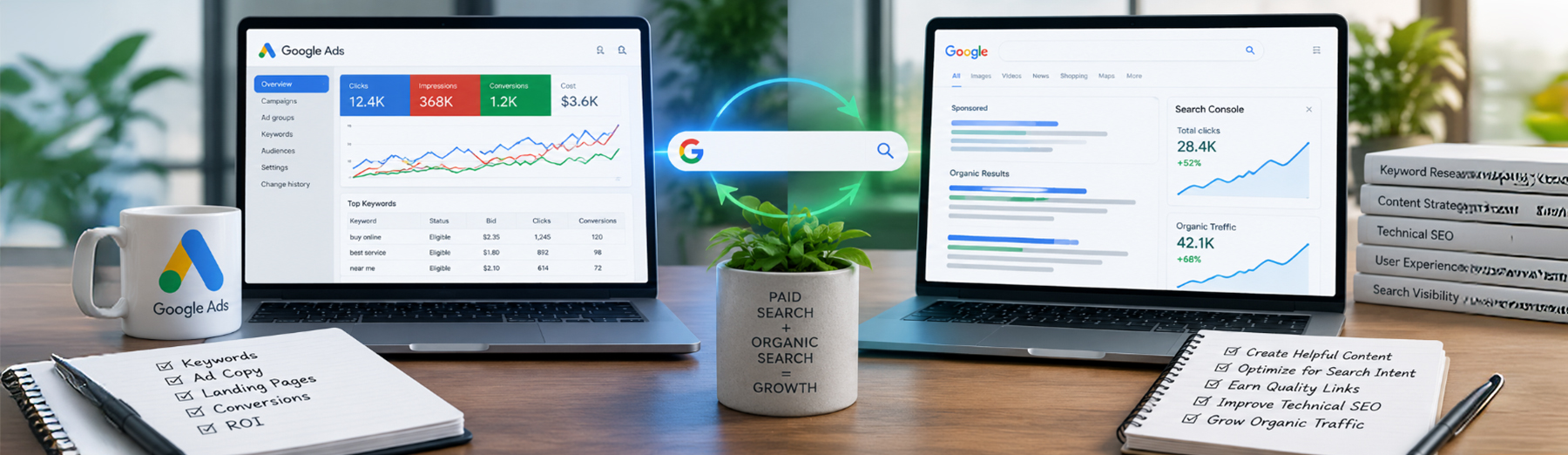
Google Ads and SEO can both help businesses attract more traffic, leads, and customers from search, but they work in very different ways. Google Ads can generate visibility quickly through paid placements, while SEO focuses on building organic search visibility over time.
For many businesses, the real question is not simply whether Google Ads or SEO is better. It is which channel best matches the company’s goals, timeline, budget, competition, and need for short-term versus long-term growth.

Should You Use Google Ads, SEO, or Both?
The best choice depends on how quickly you need results, how competitive your market is, how much budget you can invest, and whether your priority is immediate lead generation or long-term organic growth.
Google Ads may be the better choice when you need:
- Fast visibility in search results
- Immediate traffic to a landing page or offer
- Quick testing of keywords and messaging
- Leads for time-sensitive campaigns
- Control over budget, location, and audience targeting
- Measurable short-term campaign data
SEO may be the better choice when you want:
- Long-term organic visibility
- More traffic without paying for every click
- Stronger visibility across informational and commercial searches
- A more durable search presence
- Content that continues generating value over time
- Broader authority around your products, services, or expertise
For many businesses, using both creates the strongest search strategy. Google Ads can generate traffic while SEO is still gaining traction, while SEO can reduce long-term dependence on paid traffic.
Strategy Tip: Do not choose a channel based only on which one is cheaper. Choose based on the business goal, timeline, competition, and how quickly results are needed.
What Is Google Ads?
Google Ads is a paid advertising platform that allows businesses to appear in sponsored placements across Google Search and other Google properties. Advertisers typically pay when someone clicks an ad, although campaign goals and bidding models can vary.
Google Ads can help businesses:
- Appear quickly for high-intent searches
- Target specific keywords
- Control geographic targeting
- Set daily or campaign budgets
- Test different offers and messages
- Send traffic to dedicated landing pages
- Track clicks, leads, calls, and other conversions
- Adjust campaigns based on performance data
Because visibility can begin quickly, Google Ads is often useful for businesses that want immediate traffic or need to test demand while longer-term organic strategies are still developing.
The main limitation is that traffic generally depends on continued ad spend. If campaigns stop, paid visibility usually stops with them.
For businesses that want help building, managing, and optimizing paid search campaigns, our Google & Microsoft Ads Management services can help improve targeting, tracking, and campaign performance.
Google Ads Tip: Paid traffic works best when the campaign, keywords, landing page, offer, and conversion tracking are aligned around the same business goal.
What Is SEO?
SEO, or search engine optimization, is the process of improving a website so it can earn more visibility in organic search results without paying for each click.
SEO can involve:
- Keyword research and search intent
- On-page optimization
- Technical SEO
- Content creation
- Internal linking
- Website structure
- Core Web Vitals and performance
- Mobile usability
- Local SEO
- Backlink and authority building
- Structured data
- Ongoing content updates
Unlike Google Ads, SEO usually takes longer to gain traction. Results can build gradually as search engines crawl, evaluate, and rank the website over time.
The advantage is that strong organic visibility can continue generating traffic and leads without requiring payment for every visit.
For businesses that want to strengthen organic search visibility, our SEO + AEO Services can help improve technical SEO, content structure, search intent alignment, and answer-focused visibility.
SEO Tip: SEO works best as a long-term strategy. Consistent technical improvements, useful content, and strong site structure usually matter more than one-time optimization.
Google Ads vs. SEO: Key Differences
Google Ads and SEO can both generate search traffic, but they differ in speed, cost structure, targeting, longevity, and how visibility is earned.
| Factor | Google Ads | SEO |
|---|---|---|
| Speed | Can generate visibility quickly | Usually takes longer to build |
| Cost Model | Pay for clicks or campaign activity | Investment in optimization and content |
| Visibility | Sponsored search placements | Organic search results |
| Traffic Duration | Usually stops when ad spend stops | Can continue after content ranks |
| Targeting | Strong control over keywords, location, audience, and schedule | Driven more by search intent, relevance, and rankings |
| Testing | Fast for offers, keywords, and messaging | Slower to validate |
| Long-Term Value | Depends on continued budget | Can compound over time |
| Competition | Bid and quality factors influence cost and visibility | Ranking competition influences difficulty |
| Measurement | Detailed campaign and conversion data | Organic traffic, rankings, engagement, and conversions |
| Best Use | Immediate demand and controlled campaigns | Long-term organic growth and authority |
Google Ads usually offers more immediate control over traffic and targeting, while SEO focuses on earning visibility that can continue over time.
Comparison Tip: Google Ads and SEO are not direct replacements for each other. They solve different problems and often work best when used together.
Which Is Faster: Google Ads or SEO?
Google Ads is usually the faster option when a business needs visibility quickly. Once a campaign is approved and active, ads can begin appearing for relevant searches almost immediately.
SEO typically takes longer because search engines need time to crawl, evaluate, and rank website content.
Google Ads may be better when you need:
- Immediate search visibility
- Fast traffic to a landing page
- Quick testing of offers or messaging
- Leads for a time-sensitive campaign
- Short-term demand generation
SEO may be better when you are focused on:
- Long-term organic growth
- Building visibility across many search terms
- Creating durable content assets
- Reducing dependence on paid traffic over time
- Strengthening authority in your market
For many businesses, the strongest approach is to use Google Ads for immediate demand while SEO builds longer-term visibility in the background.
Speed Tip: Use Google Ads when timing matters. Use SEO when you are building an asset that can continue generating visibility over time.
Which Costs More: Google Ads or SEO?
Google Ads and SEO use different cost models, so the better value depends on the business goal, competition, timeline, and how long the strategy is expected to run.
Google Ads costs can include:
- Cost per click
- Campaign management
- Landing page development
- Conversion tracking setup
- Ongoing testing and optimization
- Higher costs in competitive industries
SEO costs can include:
- Technical optimization
- Content creation
- On-page SEO
- Internal linking
- Ongoing content updates
- Link and authority development
- Analytics and performance monitoring
Google Ads usually requires continued ad spend to maintain paid visibility. SEO often requires more upfront and ongoing work, but strong organic visibility can continue generating traffic without paying for each individual click.
Cost Strategy Tip: Compare cost based on customer acquisition and long-term value, not simply on monthly spend. The cheaper channel is not always the one that produces the better return.
Which Generates Better Leads: Google Ads or SEO?
Both Google Ads and SEO can generate high-quality leads, but the quality often depends more on search intent, targeting, landing-page experience, and conversion tracking than on the channel itself.
Google Ads can be especially effective for high-intent searches because businesses can target specific keywords, locations, schedules, and offers.
SEO can generate strong leads by attracting users through:
- Service-related searches
- Problem-solving queries
- Local searches
- Comparison searches
- Educational content
- Long-tail keywords
- Branded and non-branded organic searches
Google Ads may provide faster lead volume, while SEO can build a broader stream of organic opportunities over time.
The strongest results often come when both channels are connected to clear conversion tracking and optimized landing pages.
Lead Quality Tip: Judge each channel by qualified leads and customer acquisition—not just traffic, clicks, or rankings.
Which Is Better for Long-Term Growth: Google Ads or SEO?
SEO is generally stronger for building long-term organic visibility because optimized pages and content can continue attracting search traffic after they begin ranking.
Google Ads is different. Paid visibility usually depends on continued budget, but it can remain valuable for testing, competitive searches, seasonal campaigns, and keywords where organic rankings are difficult to achieve.
SEO can support long-term growth through:
- Evergreen service-page visibility
- Informational content
- Long-tail keyword coverage
- Local search visibility
- Internal linking
- Topic authority
- Ongoing organic traffic
- Reduced dependence on paid clicks over time
Google Ads can support long-term growth through:
- Testing keywords and offers
- Identifying high-converting search terms
- Supporting new services or markets
- Maintaining visibility for competitive searches
- Filling traffic gaps while SEO develops
- Scaling campaigns when profitable
The strongest strategy is often to let SEO build a durable search presence while Google Ads provides more immediate and controllable demand.
Long-Term Growth Tip: Use SEO to build lasting visibility and Google Ads to accelerate opportunities where speed, testing, or competitive coverage matters.
When Should a Business Use Google Ads and SEO Together?
Google Ads and SEO often work best when they support the same search strategy instead of operating as separate channels.
Using both can help a business:
- Generate traffic while SEO is still gaining traction
- Maintain visibility for highly competitive keywords
- Test which search terms produce qualified leads
- Compare paid and organic conversion performance
- Support new services, offers, or markets
- Increase overall search-result visibility
- Use PPC data to inform SEO content priorities
- Reduce overreliance on a single acquisition channel
- Retarget or re-engage users who first arrived organically
- Strengthen coverage across both commercial and informational searches
For example, Google Ads can quickly show which keywords and landing pages generate leads, while SEO can use those insights to build stronger long-term organic visibility around proven topics.
For a broader look at how search visibility is evolving beyond traditional rankings, see our guide on What Is Answer Engine Optimization (AEO)?
Integrated Strategy Tip: Use paid and organic search data together. The strongest opportunities often become clearer when Google Ads conversion data and SEO performance are reviewed side by side.
How Google Ads and SEO Support Different Stages of the Customer Journey
Google Ads and SEO can influence customers at different stages of the buying process, which is another reason the two channels can work well together.
SEO can help attract people who are:
- Researching a problem
- Comparing solutions
- Learning about a service
- Looking for local providers
- Searching for answers before they are ready to buy
Google Ads can be especially useful when people are:
- Searching for a specific service
- Comparing providers
- Looking for pricing or availability
- Ready to request a quote
- Ready to call or contact a business
- Responding to a time-sensitive offer
This does not mean SEO is only for early-stage searches or Google Ads is only for bottom-of-funnel searches. Both channels can support multiple stages depending on keyword intent and page strategy.
Customer Journey Tip: Match the channel, keyword, and landing page to the user’s level of intent instead of treating every search as the same type of opportunity.
How Should You Measure Google Ads and SEO Performance?
Google Ads and SEO should be measured against business outcomes, not just clicks, impressions, or rankings.
Useful performance metrics include:
- Qualified leads
- Cost per lead
- Conversion rate
- Customer acquisition cost
- Revenue generated
- Return on ad spend for paid campaigns
- Organic conversions
- Landing-page performance
- Lead quality
- Conversion trends by keyword or search intent
For Google Ads, businesses can usually connect ad spend directly to clicks, conversions, and cost per acquisition.
For SEO, measurement often requires a longer view because organic visibility, traffic, and conversions can build gradually across multiple pages and search terms.
The most useful comparison is not simply which channel produces more traffic. It is which channel produces the strongest business results relative to the investment required.
For businesses that want to connect campaign and organic traffic data to real business outcomes, our Analytics & Conversion Optimization services can help improve tracking, reporting, and conversion analysis.
Measurement Tip: Track leads and revenue through to the source whenever possible. Traffic growth is useful, but qualified conversions provide a much clearer picture of marketing performance.
How Tech Prime Web Approaches Google Ads and SEO
Google Ads and SEO are most effective when they are aligned around the same business goals, search intent, conversion paths, and measurement strategy.
Tech Prime Web can help with:
- Google Ads campaign strategy
- Keyword and search intent research
- Landing page optimization
- SEO and on-page optimization
- Technical SEO
- Conversion tracking
- Analytics and reporting
- Search term and keyword analysis
- Lead-generation strategy
- PPC and SEO coordination
- Ongoing campaign optimization
- Performance and conversion reviews
The goal is to use each channel where it provides the most value instead of forcing every search opportunity into either paid or organic traffic.
For businesses that need a coordinated search strategy, Tech Prime Web can help connect PPC, SEO, landing pages, analytics, and conversion optimization around the same lead-generation goals.
Final Thoughts: Google Ads vs. SEO
Google Ads and SEO are both valuable search marketing channels, but they solve different business needs.
Google Ads is usually stronger when a business needs immediate visibility, faster testing, and more control over targeting. SEO is better suited for building long-term organic visibility, broader keyword coverage, and durable search traffic over time.
For many businesses, the best strategy is not choosing one instead of the other. It is using each channel where it delivers the most value and measuring both against qualified leads, customer acquisition, and revenue.
Final Takeaway: Use Google Ads for speed, control, and testing. Use SEO to build long-term visibility and authority. When both channels are aligned around the same business goals, they can create a stronger and more balanced search strategy.